Showing posts with label Abelia x grandiflora. Show all posts

Monday, June 13, 2022

In a Vase on Monday: Better than expected

I wasn't feeling particularly inspired by the contents of my garden this week.  I decided to cut two stems of the pink lily in my backyard border, not because it was especially compelling, but because I could tell it wasn't going to hold up another week.  As the plant was also surrounded by a wire cage to protect it from the rabbits who apparently have a huge appetite for lily foliage, it also wasn't doing much for the landscape.
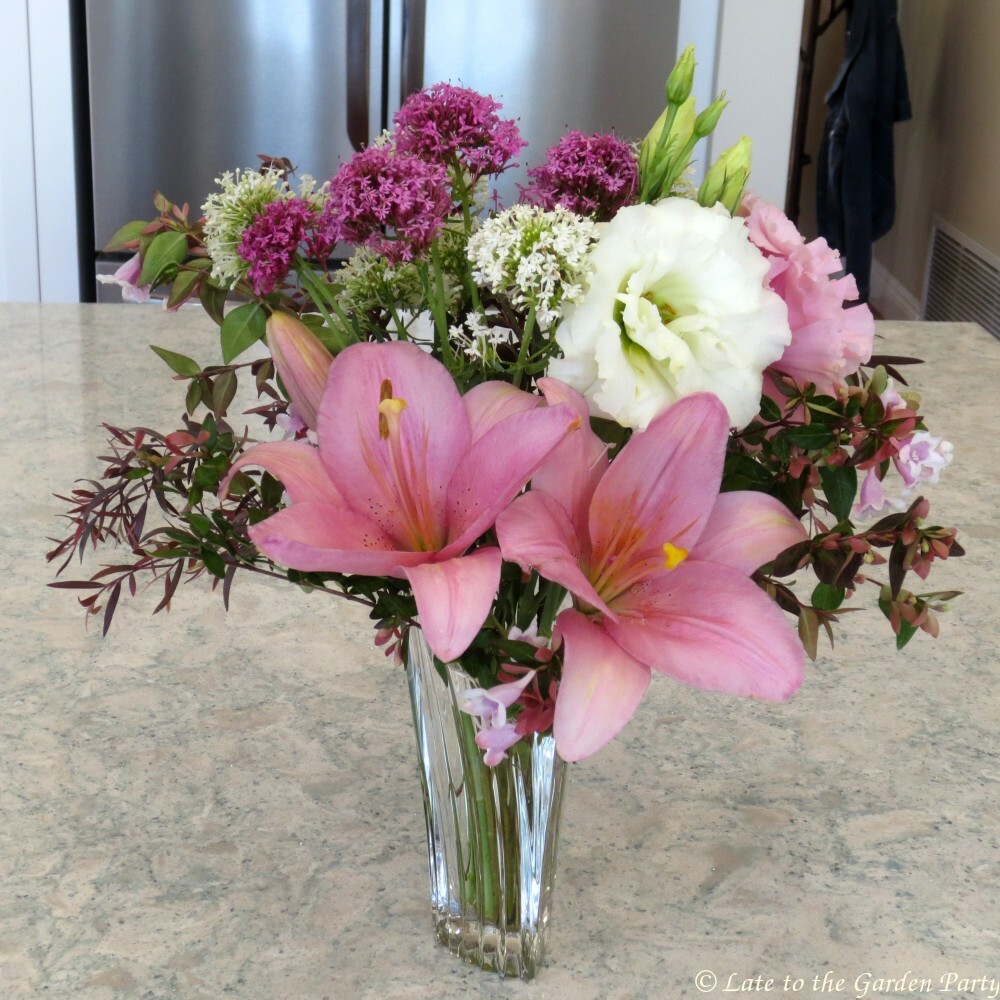
I've had the noID pink lily for at least 5 years.  The bulb was a gift with purchase and it blooms reliably but it's nothing special.  The fluffy blooms of the pink and white Lisianthus (Eustoma grandiflorum) upstaged it in my view. 

Back view: I used pink and white Centrantus ruber as filler material

Top view

Clockwise from the upper left: Abelia grandiflora 'Edward Goucher',  Centranthus ruber, pink and white Eustoma grandiflorum, Leptospermum 'Copper Glow', and noID lily


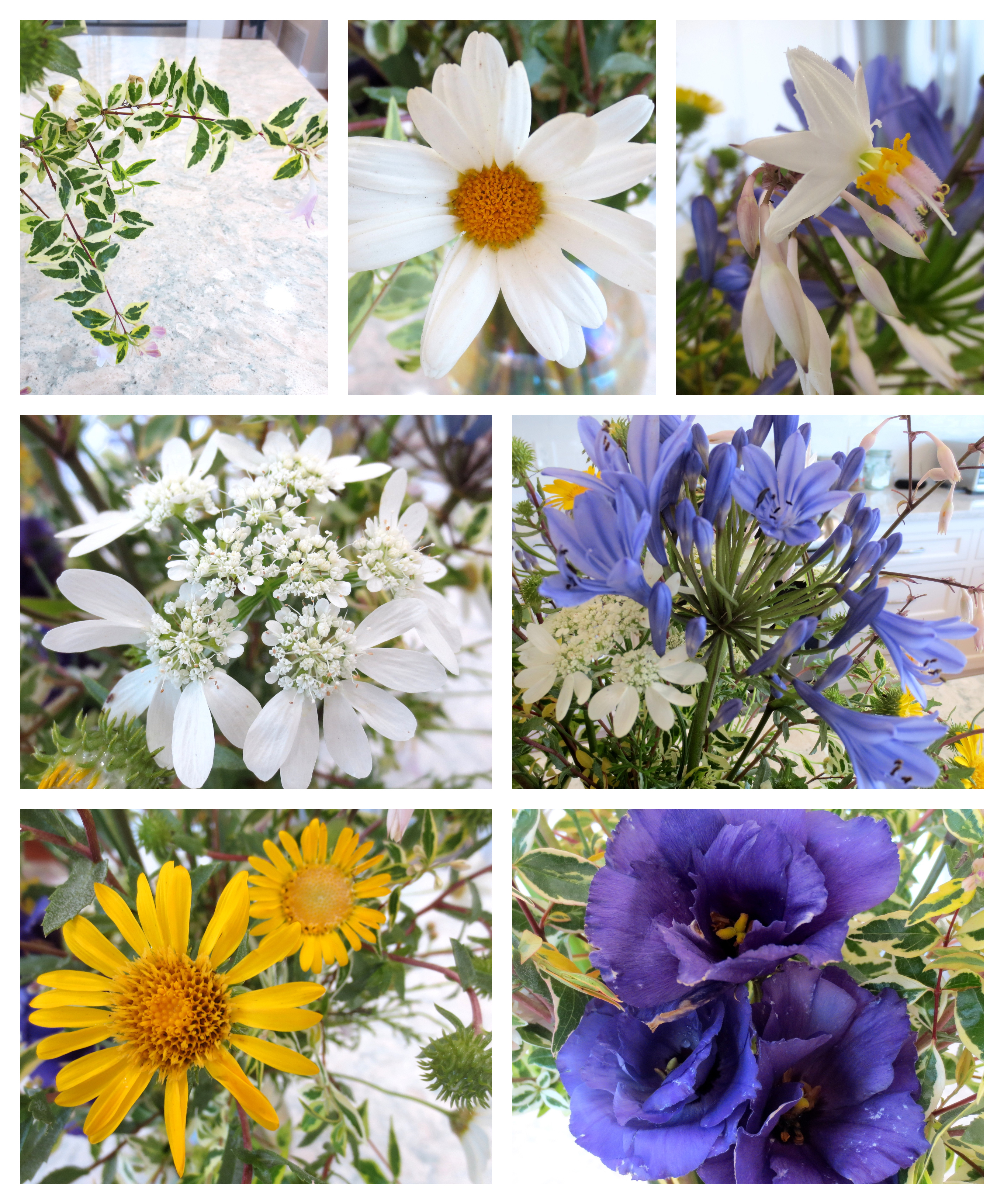
I decided on a blue, white and yellow arrangement to make use of some of my blue Lisianthus, as well as the yellow-flowered gumweed (Grindelia camporum) in the same bed.

I planted the blue Lisianthus earlier this year and, unlike the more well-established pink and white varieties that have been in the garden for over a year, many of the plants are struggling.  In contrast, the native Grindelia is thriving (like the weed its common name suggests it is) but it's also flopping all over its neighbors so I took the opportunity to cut it back until I can move it somewhere more appropriate.

Back view: The Agapanthus are now in full bloom so they're a logical choice in any blue-themed arrangement

Top view

Clockwise from the upper left: Abelia grandiflora 'Hopley's Variegated', Argyranthemum frutescens 'White Butterfly', Arthropodium cirratum, noID Agapanthus, Eustoma grandiflorum, Grindelia camporum, and Orlaya grandiflora


Both arrangements turned out better than I'd expected but, with the drought taking its toll on the plants in  my borders, I'm looking forward to the dahlias in my cutting garden.  One plant is already showing multiple buds...

For more floral creations, visit our IAVOM host, Cathy at Rambling in the Garden.


All material © 2012-2022 by Kris Peterson for Late to the Garden Party


Monday, August 17, 2020

In a Vase on Monday: Rescue Operation

It got hot last week and it's expected to stay hot most of this week.  Saturday was uncomfortable enough to keep me inside most of the day and, because the forecast was for more of the same on Sunday, I got up early and cut everything and anything I thought might be incinerated by toasty temperatures to include in my vases this week.  As it turned out, I went overboard - even by my own standards.

Vase #1 was inspired by the first blooms from Dahlia 'Labyrinth':

I played off the apricot and rose colors in the dahlia blooms when selecting companions

which led me to use stems of Grevillea 'Superb' to dress up the back of the arrangement

and to cut two stems of Rudbeckia 'Sahara' as shown in this overhead view

Clockwise from the upper left: Dahlia 'Labyrinth', Abelia x grandiflora 'Kaleidoscope', Coprosma repens 'Plum Hussey', Grevillea 'Superb', and Rudbeckia hirta 'Sahara'.  Both stems of the Rudbeckia came from the same plant even though they look very different.


Vase #2 was inspired by the stems of the purple Gladiolus that were fading fast in my cutting garden:

I'd hoped to add white Amaryllis belladonna to this arrangement but Saturday's heat left those stems in an unpresentable state, hence the addition of the lavender Lisianthus

and the white Cosmos (back view)

Surprisingly, the California aster (Symphyotrichum chilense) seemed to respond to the heat by producing more blooms (overhead view)

Clockwise from the upper left: Gladiolus 'Vuvuzela', Abelia x grandiflora 'Hopley's Variegated', Cosmos bipinnatus, lavender and blue Eustoma grandiflorum (aka Lisianthus), and Symphyotrichum chilense (aka California or Pacific aster)


Vase #3 was inspired by my desire to save the last pristine Amaryllis belladonna:

I originally thought I could insert the pink Amaryllis into the first vase with Dahlia 'Labyrinth' but even my color-blind husband told me it wasn't a good fit

I used leftover stems of Abelia 'Hopley's Variegated' and white Eustoma grandiflorum with a slight pink tinge to flesh out this small vase


The last vase features 'Green Star' Gladiolus.  All the gladiola stems in full bloom were severely affected by the heat.  Luckily, I planted about half my gladiola corms a week after the first ones and those that haven't bloomed yet don't appear to have been impacted by the heat.

I added the first bloom of Dahlia 'Enchantress' and a stem of Dahlia 'Sellwood Glory', which is similar in color

I used stems of Prostanthera ovalifolia 'Variegata' (aka mint bush) as a foliage filler (back view)

Overhead view

Clockwise from the upper left: Gladiolus 'Green Star', Dahlias 'Enchantress' and 'Sellwood Glory', Ocimum basilicum 'African Blue Basil', Prostanthera ovalifolia 'Variegata', Zinnia elegans 'Envy' and Zinnia from 'Northern Lights Blend'


Four vases is a lot, even for me.  For more IAVOM creations, visit Cathy at Rambling in the Garden.


All material © 2012-2020 by Kris Peterson for Late to the Garden Party

Monday, August 3, 2020

In a Vase on Monday: Do you prefer pastel or bold colors?

Dahlia 'Sellwood Glory' didn't quite make it to the gate in time to be featured on "In a Vase on Monday," the popular meme hosted by Cathy of Rambling in the Garden but I'll be surprised if it doesn't bloom within the next few days.  

Photo taken Sunday afternoon


Meanwhile, 'Mr Optimist' is sprinting, followed closely by 'Enchantress', 'Labyrinth' and 'Loverboy'.  The rest of my dahlias currently seem content to produce more and more leaves but I'm reasonably sure they'll come through eventually.  The first of Zinnias I pinched back are finally budding up too, a self-seeded Amaranthus has made an unexpected appearance, and more than half a dozen Gladiolas have bloom spikes so things are looking up in my cutting garden.  However, this week I once again made do with what my larger garden had to offer.

My first vase was inspired by the light pink Scabiosa in the front garden.

While the pink Amaryllis belladonna are still dominating my backyard border, a few white specimens finally showed up.  At the same time a few white Lisianthus blushed with pink also popped up in different areas of the garden.  Serendipity!

I dressed up the back of the vase with stems of Abelia 'Edward Goucher', Ammi majus, and Salvia canariensis.  The Salvia is more bracts than flowers now. 

Top view

Clockwise from the upper left: Amaryllis belladonna (aka naked lady), Abelia grandiflora 'Edward Goucher', Eustoma grandiflorum (aka Lisianthus), Scabiosa columbaria 'Flutter Rose Pink', Ammi majus 'Dara', and Salvia canariensis var candidissima


The second vase is comprised of more foliage than flowers but includes stems of some of the Leucadendrons with bracts that mimic flowers.

There are no actual flowers visible in this front view.  I used two stems of Caladium to pull the colors together.

The back view offers just two real flowers, those of a white-flowered Crassula pubescens and a red-flowered Penstemon mexicali

Top view

Clockwise from the upper left: Leucadendron 'Devil's Blush', Crassula pubescens ssp radicans (aka red carpet stonecrop), Helichrysum petiolare 'Licorice Splash', Caladium 'Creamsickle, Penstemon mexicali 'Red Bells', and Prunus caroliniana (I also used Leucadendron 'Safari Sunset', not shown in close-up)


All material © 2012-2020 by Kris Peterson for Late to the Garden Party

Monday, July 13, 2020

In a Vase on Monday: Surprising myself

The heat turned up here last week, rising into the low 90sF (33C).  My garden is entering its summer doldrums in response.  Last year the first dahlia blooms appeared in my cutting garden in late June and early July but I haven't even seen evidence of buds forming yet from the tubers I planted this year.  Of course, last year I planted most of my tubers in early March whereas this year I didn't get around to planting the first of these until mid-April and didn't finish planting the rest until early May.  As I dragged my feet on pulling the last of my cool season flowers as well, I was also late in sowing sunflower and zinnia seeds in their place.  So, I have a gap in my supply of floral material at the moment, especially as only a few flowers are growing in profusion in the garden at large.

Early Sunday morning I focused on the two flowering plants with the most blooms at present, lion's tail and California aster, but I was at a loss as to what to pair with them that I haven't used before.  I strolled the garden and cut a few things here and there on spec.  What I ended up with produced my first vase, which wasn't something I had in mind at the start at all.

I used an ornamental teapot with colors that matched my selected plant material.  I think this is the first time I've used the dwarf myrtle (Myrtus communis) that's been growing in my garden for almost 5 years now.  Yellow Jerusalem sage (Phlomis fruticosa) produced a few stray blooms long after the rest of the flowers have gone to seed.

Back view: I used Corokia virgata 'Sunsplash' (aka variegated wire bush) to add height and an airy quality and stems of the copper-tinged Leucadendron 'Safari Goldstrike' as an accent and filler

Top view

Clockwise from the upper left: Corokia virgata 'Sunsplash', Leucanthemum x superbum, Leucadendron 'Safari Goldstrike', Myrtus communis 'Compacta', Phlomis fruticosa, and noID Cosmos


I originally thought I'd throw the lion's tail (Leonotis leonurus) I'd cut in with the materials that formed the first vase but, when I decided against that, I paired the former with other blooms and foliage to create a fiery mix.

I stuck to yellow, orange and red for this arrangement

Back view: The slightly cooler tones of the variegated Abelia brought the temperature of the mix down a bit

Top view

Clockwise from the upper left: Leonotis leonurus, Abelia grandiflora 'Kaleidoscope', Cuphea micropetala, Leucadendron 'Wilson's Wonder', Gaillardia 'Arizona Sun', and noID Zinnias


I ended up using the California aster (Symphyotrichum chilense) in a larger scale version of the small arrangement of "leftovers" I created last week.

The dark blue Lisianthus (Eustoma grandiflorum) took a beating under last week's heat but the aster appears to love the higher temperatures.  The latter has been blooming well ahead of schedule.

Back view

Top view

Left to right: Abelia grandiflora 'Hopley's Variegated', Eustoma grandiflorum, and Symphyotrichum chilense.  I added stems of a noID lavender as well but I couldn't get a clear photo of those.


Our temperatures are expected to drop this week and, although I've been on a bit of a plant buying spree of late, none of my new purchases are poised to produce instant blooms so I've no idea what I'll come up with next week.  However, I've realized that my garden has a way of providing even when I can't see it.

For more IAVOM creations, visit Cathy at Rambling in the Garden.


All material © 2012-2020 by Kris Peterson for Late to the Garden Party

Monday, May 18, 2020

In a Vase on Monday: A mix of spring and summer blooms

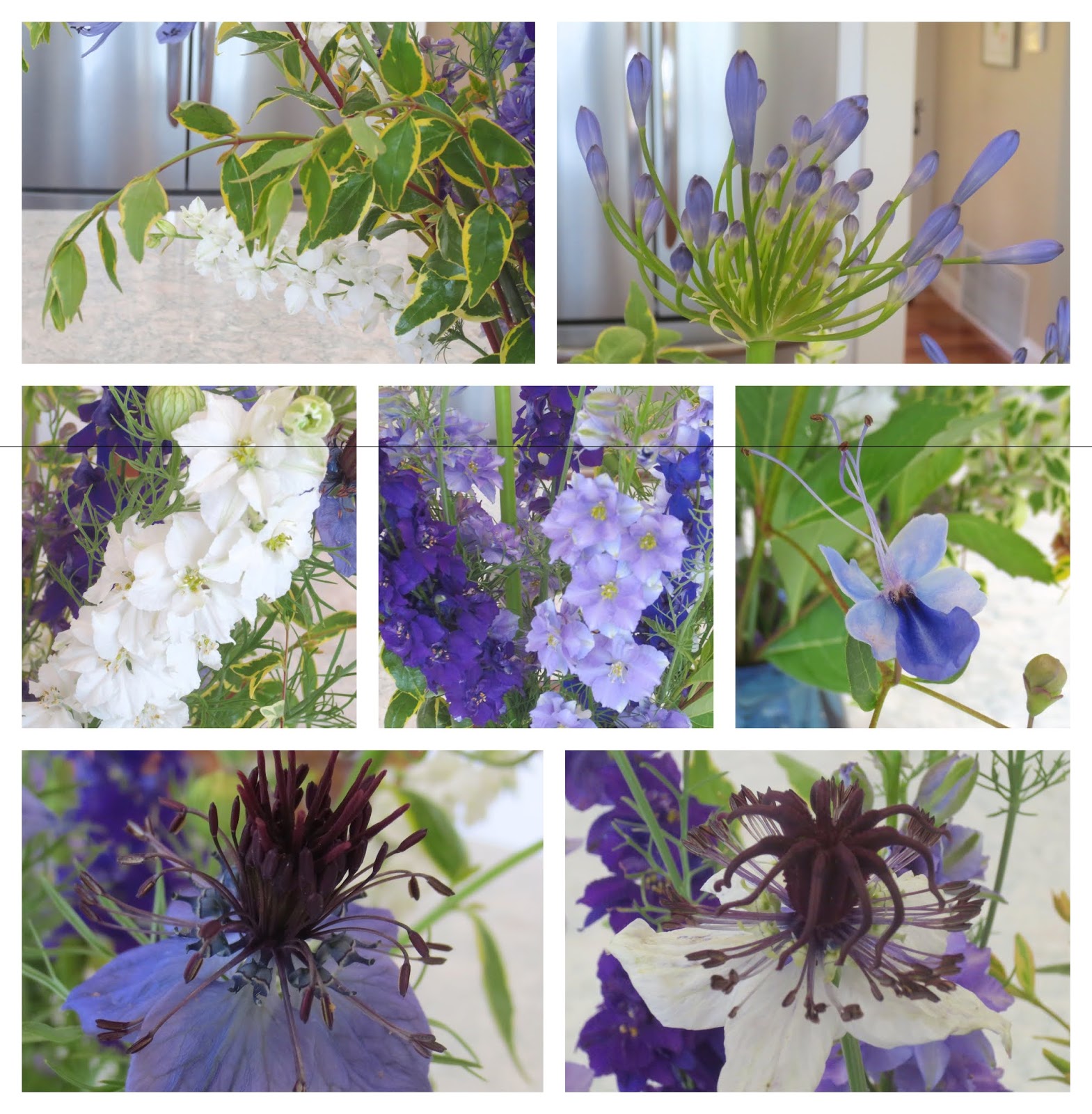
There are still a LOT of flowers suitable for cutting here, as anyone who read Friday's Bloom Day post could tell, but yesterday I went looking for something a little different to include in this week's flower arrangements.  The appearance of the first Agapanthus blooms had me thinking of a blue and white arrangement and the deal was sealed when I spotted the first flowers on the Rotheca myricoides (aka butterfly bush) I planted last fall.

Our heatwaves didn't fry the larkspur (Consolida ajacis) as I feared so stems of the 'Summer Skies Mix' I grew from seed provided the perfect filler.  I cut just a single stem of Rotheca, with only two flowers, hoping that the buds will open as the week progresses. 

Back view: Stems of blue and white Nigella 'Starry Nights Mix', also grown from seed, were added to provide more interest 

Top view

Included, top row: Abelia grandiflora 'Hopley's Variegated' and noID Agapanthus
Middle row: Consolida ajacis in white and dark and light blue and Rotheca myricoides
Bottom row: Blue and white Nigella papillosa 'Starry Nights Mix'


The inspiration for my second arrangement was a new vase, received as an early birthday present from a surrogate family member.  The vase is unusual and I didn't feel I could put just anything in it so I went looking for floral material that would complement its colors.  I selected Salvia lanceolata, a South African native with mauve flowers as my starting point and took off hunting down suitable companions from there.

I used the same Salvia in another arrangement in April but I like this mix better

Back view: The reddish-pink Centranthus ruber used here is far less common in my garden than the  Centranthus with paler pink blooms

Top view

Included, top row: Centranthus ruber and Coprosma repens 'Plum Hussey'
Middle row: Abelia grandiflora 'Edward Goucher', Lagurus ovatus, and pink Lathyrus odoratus
Bottom row: noID rose and Salvia lanceolata


For more creations by IAVOM contributors, visit Cathy at Rambling in the Garden.


As a side-note, we got a bit of rain overnight!  That's remarkable for May.  Last night's report was a 20-30% chance of 0.02/inch of rain overnight but I've tallied one-tenth of an inch already and it's still raining.  What a wonderful May surprise.  I hope the week brings a pleasant surprise or two your way as well!

All material © 2012-2020 by Kris Peterson for Late to the Garden Party