Showing posts with label Madrona Marsh Preserve. Show all posts

Friday, February 24, 2023

Madrona Marsh (part 2)

With this post I'm taking you across the street from Madrona's Nature Center, covered in my prior post,  to the Madrona Marsh Preserve itself. 


There aren't many wetlands left within the vast expanse of Los Angeles County.  Even though I've lived in the general area for more than two decades, I'd never paid a visit to this 43-acre throwback to a different time until 2018.  And it's only nine miles from our current home!  You can read about my first visit here and my second in 2019 here.  I'd intended to pay another visit in early summer 2019 but somehow that plan was delayed for four years.

The marsh itself hasn't changed much, which I suppose is a good thing.  Without any actual data, and despite our heavier-than-usual rain in January, my sense is that the preserve is drier than it was at the time of my last visit at the end of January 2019.  I also saw far fewer birds on this occasion; however, the fabric of the place is still much the same.

These signs establish the rules governing use of the Preserve, which were generally respected even without any obvious enforcement measures

In this case, it's worth paying attention to the map and the information it offers before heading off along one trail or another

This is what the Preserve refers to as coastal prairie

The bush sunflowers (Encelia californica) were blooming throughout the prairie area


In contrast to the native plant garden surrounding the Nature Center, the emphasis within the preserve itself has less to do with individual plants than the overall feel of the place but that doesn't mean I didn't take a close look at selected plants.

Clockwise from the upper left, I identified Amsinckia menziesii (fiddleneck, an annual herb), Baccharis salicifolia (mulefat), Encelia californica, Peritoma arborea (bladderpod), Quercus agrifolia (California live oak), and Salix laseolepis (arroyo willow)


The "vernal pools" that fill during our winter rainy season were more evident than they were during my first visit in 2018 but appeared less expansive than they'd been at the time of my 2019 visit.

The water's depth was less than one foot in this pool


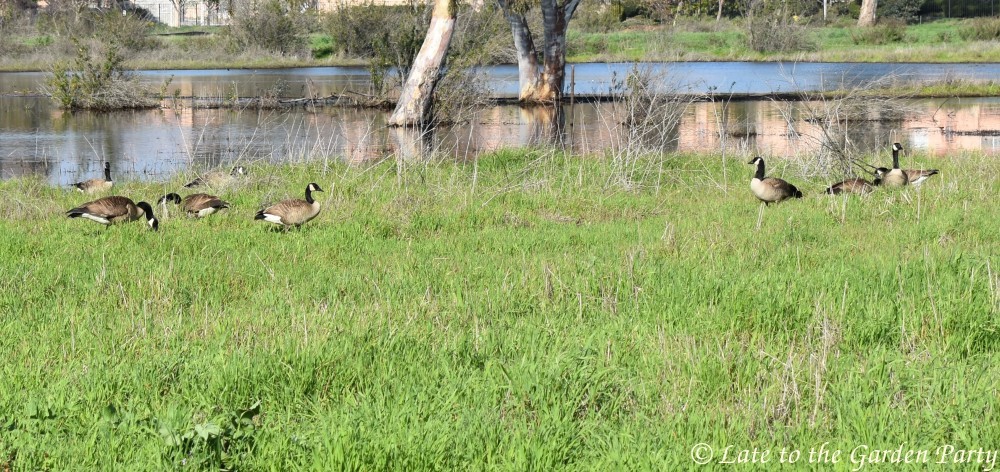
This was the best shot I got of the geese on site.  I spotted another pair in the wetland area but, partially screened by dry foliage and trees, the photos I took of them were fuzzy.  I made a serious mistake in visiting the marsh without a telephoto lens.


I'd hoped to find more birds in the wetlands.  I did but their numbers were noticeably less than I found during my 2019 visit.  Whether that had to do with the lower water levels or colder temperatures associated with the storm system moving into our area - or other factors entirely - I can't say.

You know you've entered the deeper wetland area when you see clumps of tule (Schoenoplectus acutus) in the water

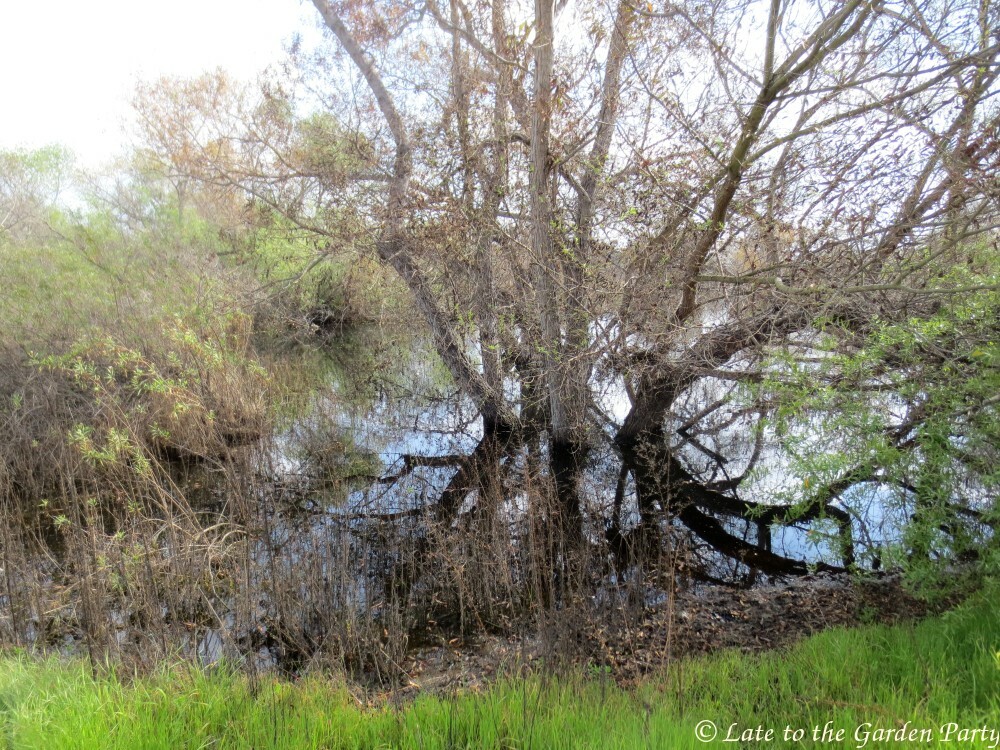
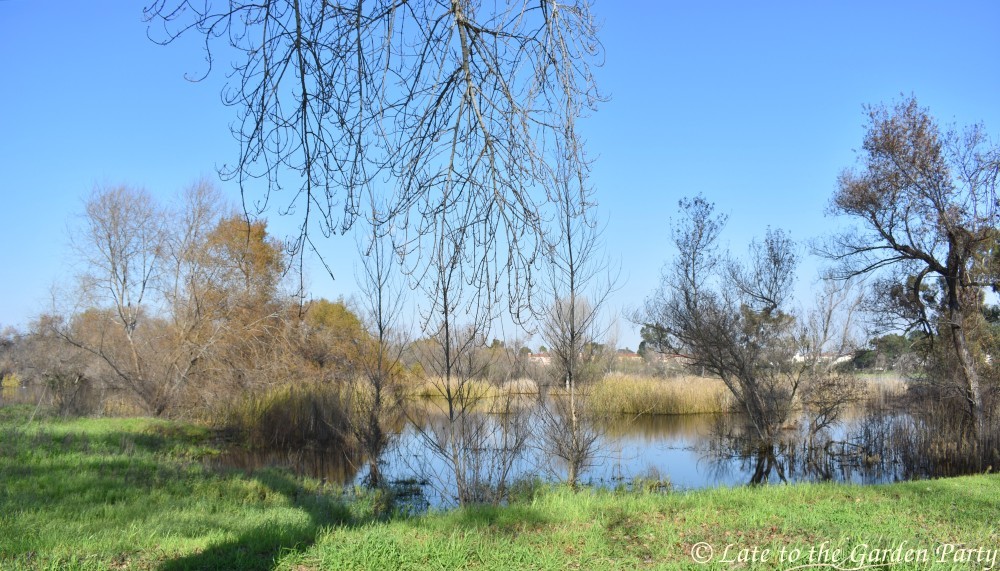
The bare tree branches are all the more attractive when reflected in the water


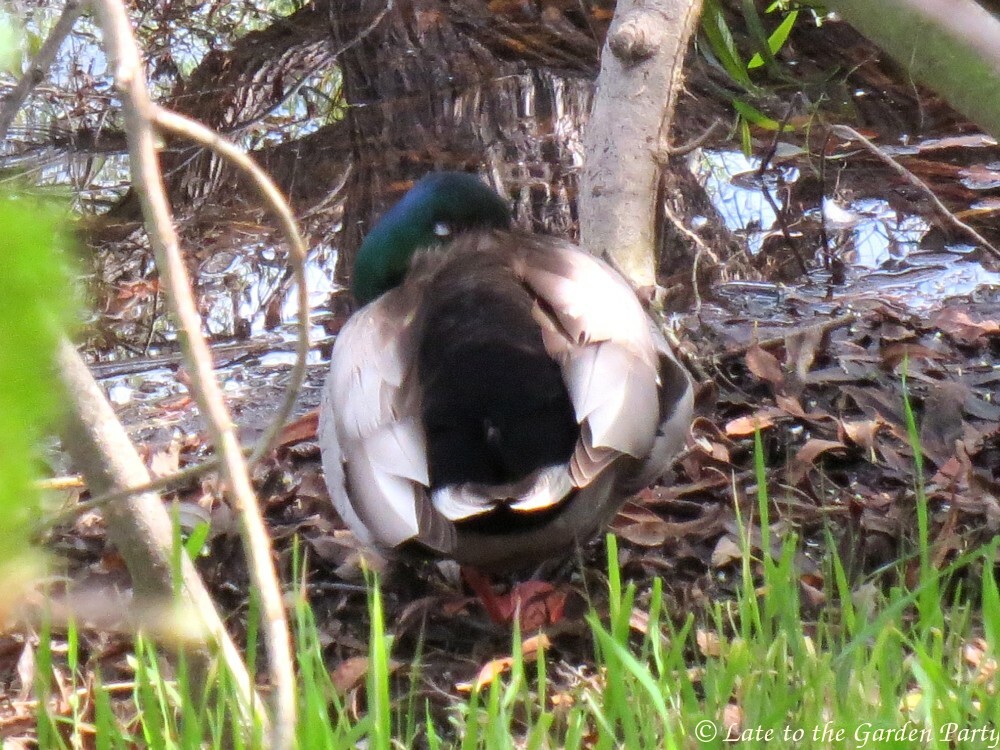
This was my best photo of a duck, even if he was turned away from me, apparently sleeping, and half-hidden within a thicket of branches 


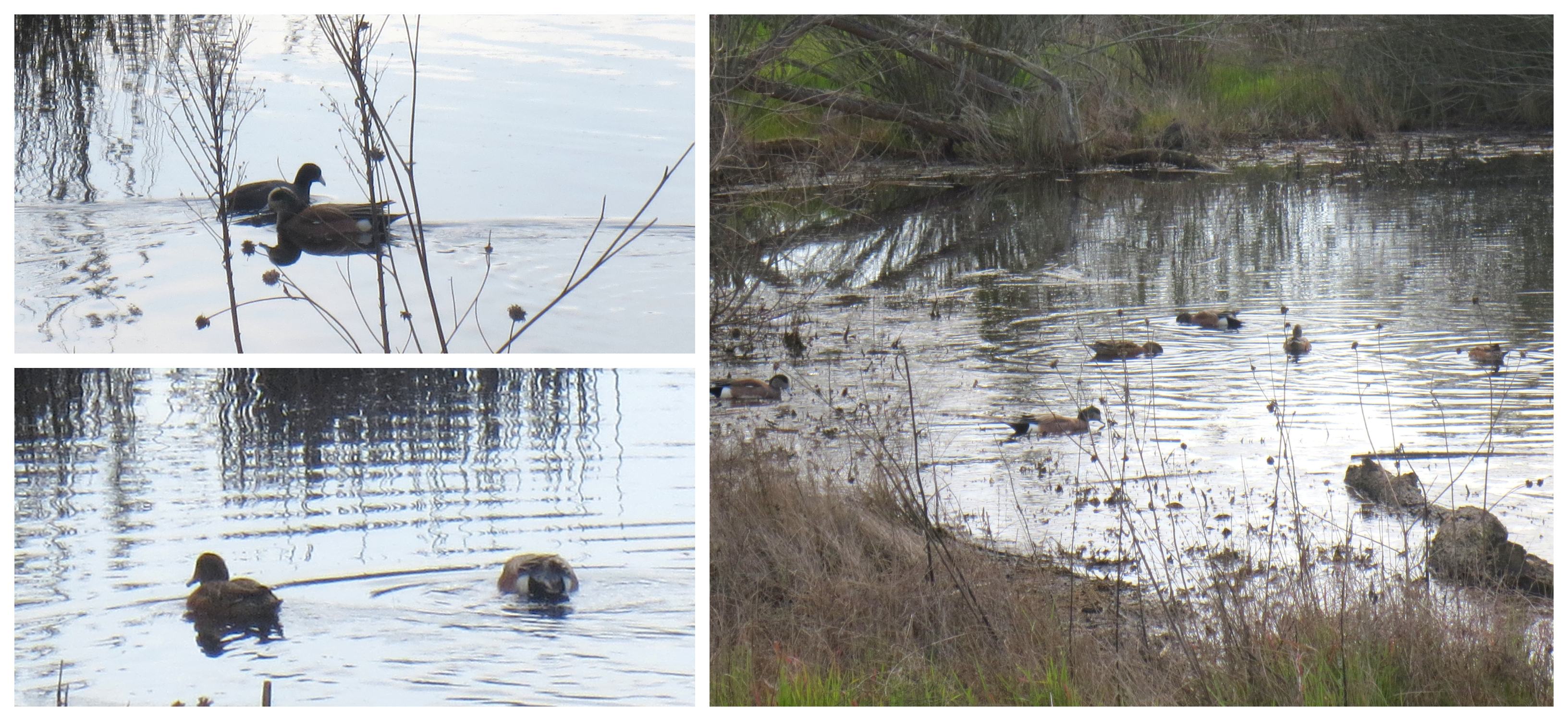
There were numerous pairs of ducks in this area of the wetlands but, without a telephoto lens, I wasn't able to get many photos

These were my best duck photos, taken nearer the shore but still at a distance and therefore somewhat fuzzy


On my way to the exit, I passed the Preserve's propagation nursery.
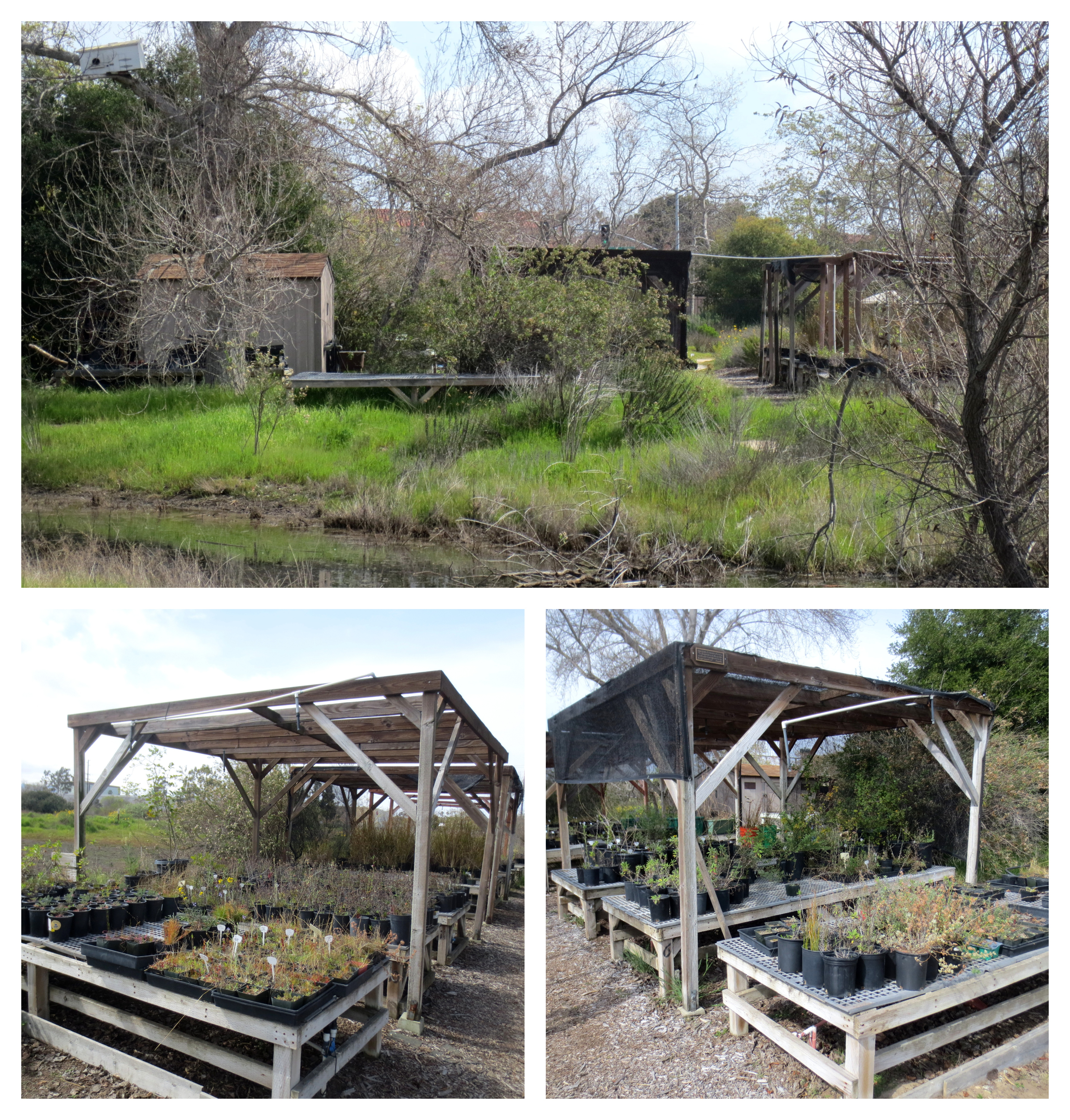
I think the propagation done here is done for the benefit of the Preserve and not for sale


If you're in the area and interested in a visit, I recommend checking out the Preserve's website.  There's no charge for admission, although you can offer a donation.  Spring and early summer may be the best times to visit; however, the website has slideshows and videos showing what the area looks like at other times of the year.  It also offers photos of the insects, birds, and even mammals that call the area home.  I'm going to try to pay an early summer visit this year - and I'll bring the camera with a telephoto lens with me next time.

Best wishes for a wonderful weekend.  It's unusually cold here and we're anticipating heavy rain today.  We briefly had hail yesterday morning!


All material © 2012-2023 by Kris Peterson for Late to the Garden Party


Wednesday, February 22, 2023

An overdue visit to Madrona Marsh (part 1)

When I want a closer brush with nature than my own garden provides, I usually go to the local botanic garden but, as my January visit showed me, it's not particularly tranquil at present.  Then it dawned on me that I haven't visited Madrona Marsh Preserve since January 2019.  It's a natural wetland area that provides a sanctuary for birds in the middle of the nearby city of Torrance.  A canceled appointment on Tuesday morning opened up an unexpected opportunity to pay a visit.

This post focuses on the native plant garden surrounding the Preserve's Nature Center, directly across the street from the marsh itself.  I'll cover my visit to the marsh in a separate post on Friday.

The Nature Center's building wasn't open to visitors on Tuesday morning but the garden was of greater interest anyway

These bush sunflowers, Encelia californica, were the most prominent floral features in both the native plant garden and the marsh itself.  Their sheer numbers and bright color made them hard to miss.


The first thing I noticed once inside the garden was the sound of the birds chirping and the bees buzzing.  As the marsh and the Nature Center are surrounded by a mix of busy roads, condominiums and businesses on all sides, it was surprising how well the sounds of nature masked them.

This was the garden's only water feature but the birds were all over it

The ever-popular bug house was prominently featured

The plants were roughly organized by local ecosystems (coastal scrub, chaparral, desert, etc.) but I've loaded my photos in alphabetical order rather than the order in which I encountered them.  Although some plants were individually identified by signs, most were not and I spent a considerable amount of time working on plant names following my visit.  My cell phone's plant identification feature helped (it's getting better!), as did clues provided by signs scattered around the garden.

Many of the plant signs were almost buried within the foliage and at least one provided photos without plant names.  All relied exclusively on common names and many plants weren't identified at all.

I was very impressed by this bushy Arctostaphylos.  I'd love to have one like this in my own garden.

I do have Artemisia californica in my garden.  Pruned hard 2+ months ago, it's growth has exploded since our rainy January.

The flowers of this Astragulus trichopodus (rattlepod) were less interesting than its seedpods

I think this is Berberis nevinii (syn. Mahonia nevinii)

The red fairy duster (Calliandra californica) was found in the garden's desert plant area

No California native garden is complete without Ceanothus.  I can't name the variety.

This Cercocarpus betuloides, commonly known as mountain mahogany, was new to me.  It's a large shrub with masses of small yellow flowers.

There were a lot of Dudleyas scattered about

I think this one is Eriodictyon califonicum, also known as Yerba santa, but I could be wrong.  The plant is used in traditional medicine to treat asthma and upper respiratory ailemts.  It's also the primary nectar source for checkerspot butterflies.

My brain identified this as a trailing Lantana at the time of my visit but I questioned that identification when I looked at this photo.  It might be Mirabilis laevis, also known as desert wishbone bush.

This isn't the lupine I see growing alongside local roads but it might be Lupinus chamissonis, aka dune bush lupine

Rhus integrifolia (lemonade berry) grows all over my own area but they don't bloom nearly as heavily as those I found at the Nature Center

This appears to be Rosa minutifolia, aka Baja rose

This hummingbird sage (Salvia spathacea) had a head start on the Cleveland sages , which were just getting started

I think this is Verbena lilacina 'De la Mina'.  I have a few in my garden, although they're not looking nearly this good.


I'll share my walk through the marsh on Friday.


All material © 2012-2023 by Kris Peterson for Late to the Garden Party


Friday, February 1, 2019

Madrona Marsh: Refreshed by rain

Earlier this week, I paid my second visit to Madrona Marsh, a 43-acre natural wetlands sandwiched between stores, business offices, gas stations, and condos in Torrance, California, about 9 miles from my home. 

This map is provided near the entrance to guide visitors


When I last visited just shy of one year ago, it was so dry the vernal pools (shown in pink in the map above) were empty despite the fact that it was the middle of our rainy season. 

This time, instead of dried mud, I saw this pool as I walked in.  It's depth measured just over a foot and a half.


Last year was the driest I can remember.  We recorded just 3.88 inches of rain here between October 1, 2017 and September 30, 2018.*  This year's rain total is already 276% of last year's total, albeit still short of our annual average.

I could hear birdsong from the moment I stepped inside the gate.  And frogs!  I haven't heard frogs croaking in years.  I didn't have binoculars so I didn't do any proper birding but ducks, geese and herons were readily visible throughout the preserve.


A path my husband and I walked last year was submerged and impassable.


A friend of mine had visited the marsh several days before I did to take photos as inspiration for future paintings.  Wild and unmanicured, I could see what impressed her about the landscape.  The color contrasts and the reflections in the water created picturesque scenes.

Tule, or wetland sedge, is visible throughout the areas with deeper water


Sometimes it was hard to tell what was solid and what was a reflection

I did my best to crop out neighboring buildings from my photographs but trust me: they ring the preserve on all sides.  Nonetheless, within the preserve you can almost forget that you're surrounded by traffic and all the usual vestiges of life in an urban environment.


After leaving the preserve, I made a brief spin through the Nature Center's native garden across the street.  There wasn't a lot in bloom - even landscapes in Southern California are muted during the winter months - but there was some floral color.

Once again, signs weren't helpful in identifying species by their botanical names

Clockwise from the upper left, my best guess on plant IDs are Calliandra eriophylla (aka fairy duster), Ceanothus, Eriogonum (aka buckwheat), Encelia californica, Verbena lilacina, and I haven't a clue

Along with Encelia californica, Peritoma arborea (aka bladderpod, shown here) was the most common flowering plant in the preserve


We got another three-quarters of an inch of rain yesterday and there are two more storms lined up to pelt us over the next few days.  Spring at the marsh may be very lively this year.  I hope to check it out again in April or May.  According to Wikipedia, after the rain stops, the water level in the marsh drops about one-quarter of an inch (6mm) a day, drying it out entirely by the end of August until the rains return the following winter.

Have a wonderful weekend!


*"Rain years" in California are calculated from October 1st through September 30th of the following calendar year.  Rain in SoCal is almost exclusively a winter/early spring phenomenon.


All material © 2012-2019 by Kris Peterson for Late to the Garden Party