Showing posts with label A Week of Flowers. Show all posts

Friday, December 5, 2025

A look back - and ahead (in collaboration with A Week of Flowers)

Cathy of Words and Herbs is once again sponsoring her annual "A Week of Flowers" meme as a way of offsetting the gloomier days of December in the Northern Hemisphere.  It's a way of looking back at the more flowerful periods of the year and also looking forward toward what we can expect when the days once again get longer and warmer.  Conditions in coastal Southern California aren't as cold or as gloomy on average as conditions elsewhere in the Hemisphere but flower power is in short supply even here and I like to remind myself of what's just around the corner for my garden so I concentrated on the much-loved flowers that hopefully await me in January and February.

As I wasn't able to carve out time to participate in Cathy's meme during most of the week, I hope you'll forgive me if I cram nine of my 2025 January and February favorites into this post.  I promise to spare you any commentary beyond plant names.

Anemone coronaria, clockwise from the upper left: 'Azzurro', 'Mr Fokker', 'Grape', 'Bianco Centro Nero', 'Mount Everest', 'Rarity', and 'Rosa Chiaro'

Arctotis 'Large Marge', 'Opera Pink', and 'Pink Sugar'

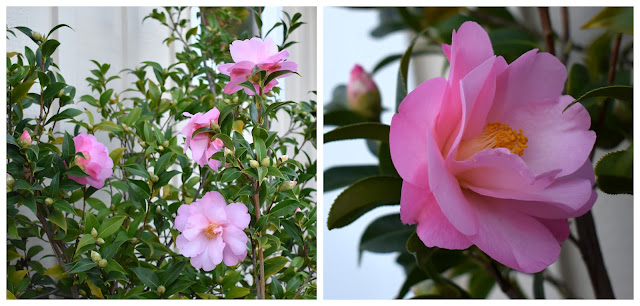
Camellia williamsii 'Taylor's Perfection'

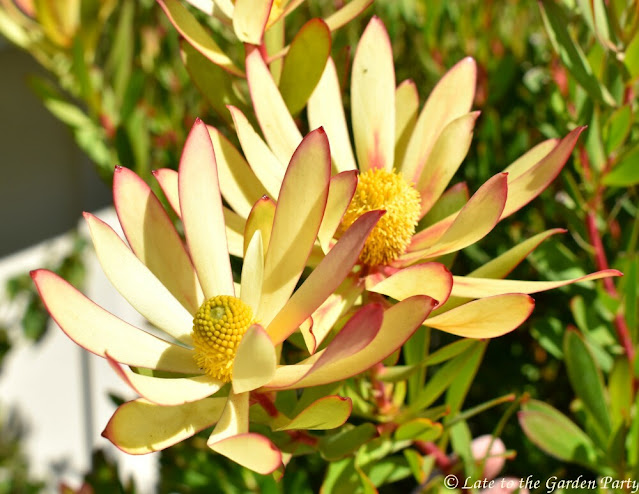
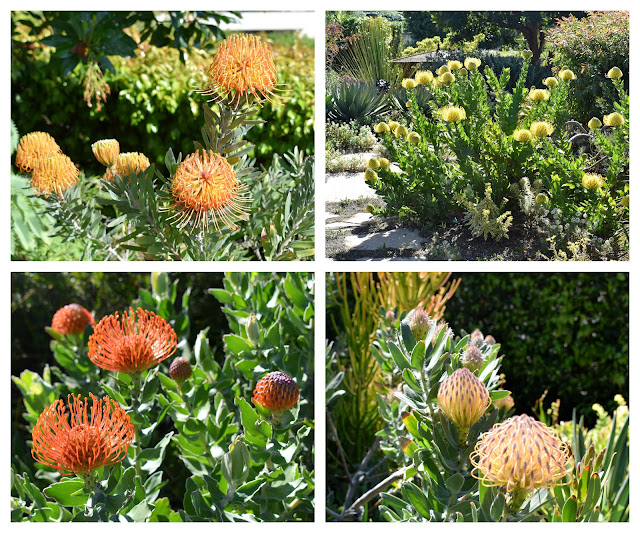
Leucospermum 'High Gold'

Leucospermum 'Hybrid Spider'

Leucospermum 'Sunrise'

Metrosideros collina 'Springfire'

Narcissus 'Geranium'

Sparaxis tricolor


That's my contribution to Cathy's week-long flower-fest this year, and the last of my blog posts this week.  Best wishes for a pleasant weekend!


All material © 2012-2025 by Kris Peterson for Late to the Garden Party

Friday, December 6, 2024

A Week of Flowers - Day 7

I've had fun with 'A Week of Flowers' and I want to thank Cathy at Words and Herbs for inviting bloggers to participate once again this year.  I remembered that I'd joined in last year on an ad hoc basis but I was surprised to discover that I'd submitted posts in 2021 and 2022 as well.  Maybe next year, assuming Cathy rings the bell once more, I'll get my act together and participate from start to finish.


To wrap up the fourth of my posts this year for Day Seven, I focused on blooms that stood out in April 2024:

Alstroemerias put on a growth spurt in spring but they hang on into summer until it just gets too hot for them before gradually reappearing as temperatures cool in the fall

I planted bulbs of Ferraria crispa (aka starfish iris) in 2019.  The flowers make haphazard appearances but I got a few blooms last April.

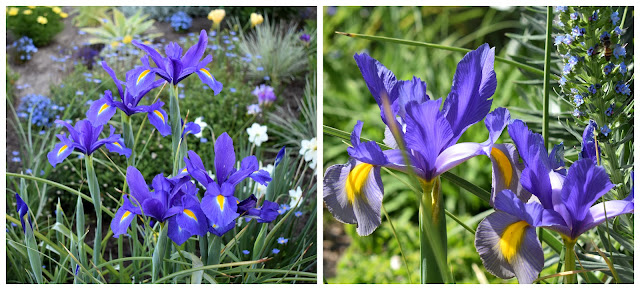
The tall Dutch Iris (Iris hollandica) put on a good display every spring.  I haven't planted any new bulbs this year, trusting that those I've planted in prior years will show up again in 2025.

All the pincushion flowers of my Leucospermum shrubs can be found in bloom in April

I inherited calla lilies (Zantedeschia aethiopica) with the garden.  Almost all of the bulbs are located on our very dry back slope. The plants die back every summer and reappear following our winter rainy season but, without rain, they don't bloom much, if at all.  They did well the last 2 years when we had heavier-than-usual rainfall but, unfortunately so far, 2025 doesn't look auspicious.


That's a wrap for the special edition of 'A Week of Flowers' this year.  I'll be returning to my regular programming next week.  Thanks again to Cathy at Words and Herbs for hosting this lovely meme.  Check in with her to see what she and other contributors have posted today.  


All material © 2012-2024 by Kris Peterson for Late to the Garden Party

Thursday, December 5, 2024

A Week of Flowers: Day 6

I've got another post today for 'A Week of Flowers', hosted by Cathy at Words and Herbs.  I'm still focused on spring, which in coastal Southern California rears up in full force in March.  I had a hard time restricting myself when it came time to selecting a few highlights from March 2024 but here are those that made the cut:

This is Calliandra haematocephala (aka red powder puff), a massive shrub growing up against one side of our garage

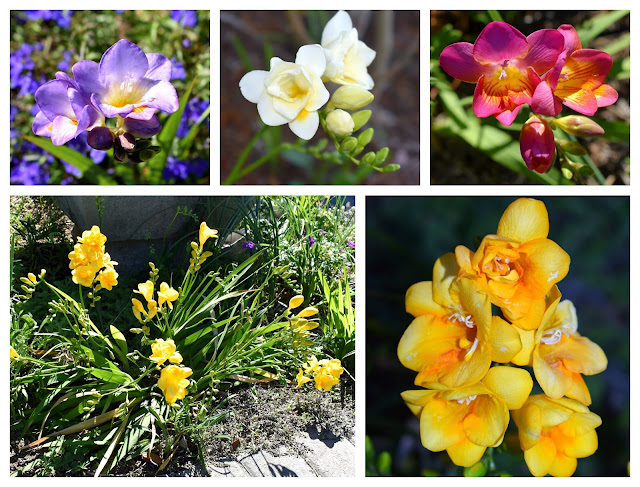
Although the Freesias get started in February (and sometimes earlier), they're not fully on a roll until March

A variety of different Narcissi make their presence known

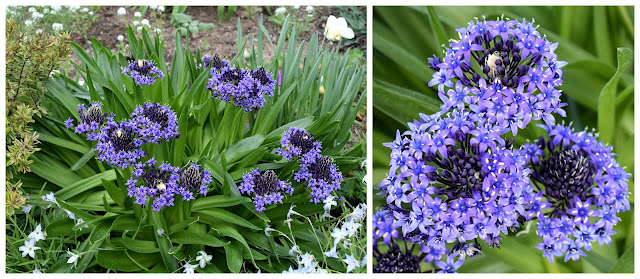
Scilla peruviana (aka Portuguese squill) hails from the area surrounding the Mediterranean Sea, not Peru as the species epithet suggests

I've had little luck growing the "fancy" tulips that require colder temperatures (even when I carefully refrigerate the bulbs prior to planting) but I've had some success with species tulips such as this Tulipa clusiana 'Lady Jane'


Cathy at Words and Herbs and others contributing to this meme have other beauties to share.  Be sure to check them out by going to Cathy's website.


All material © 2012-2024 by Kris Peterson for Late to the Garden Party

Wednesday, December 4, 2024

A Week of Flowers: Day 5

It's Day Five of Cathy's 'A Week of Flowers' at Words and Herbs and I'm joining in again with my second post.  Absent a glitch in my schedule, I'm planning to hang on through Day Seven.  Cathy's invited bloggers to join in with photos of flowers or other joys of nature to buoy the spirits of gardeners and others in the Northern Hemisphere who may be experiencing gloomy skies and cold temperatures.  I can't actually claim either at the moment in sunny Southern California, where we're experiencing warmer-than-usual temperatures at the moment.  But my garden is still missing the color (other than green) I'm used to and this is a way for me to dampen my impatience for spring's arrival.

Here are a few of the early spring plants I celebrated last February:

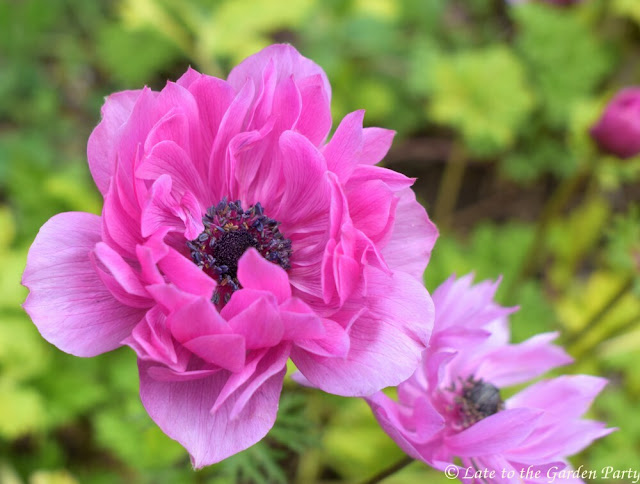
I plant Anemone coronaria corms in the raised planters of my cutting garden every year.  These were supposed to be 'Lord Lieutenant' but I'm guessing they were 'Mr Fokker'.  Regardless of their name, they were appreciated!


This is Anemone 'Rosa Tigrato'.  I planted this one and a few new varieties this fall.  The corms are already sprouting and I'm hoping they'll bloom on a similar schedule in 2025.

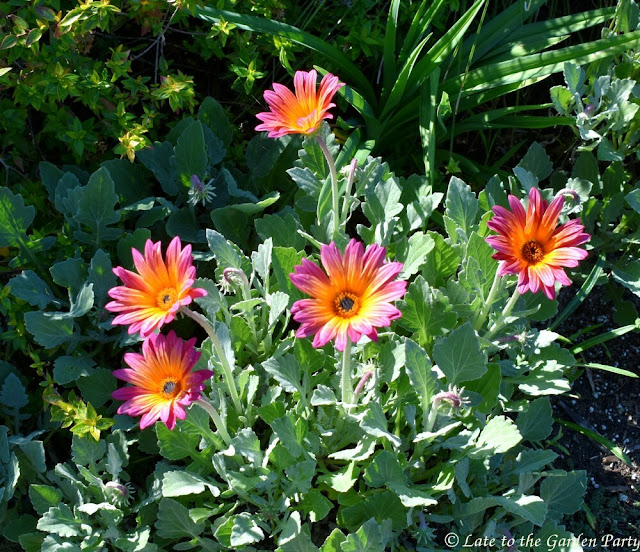
This is my favorite Arctotis, called 'Pink Sugar'.  She made a very early appearance last February.  However, several of my plants died back over the summer and now we're seriously short on rain.  I took some cuttings, though, so my fingers are crossed that I'll manage a replay of my success in 2024 anyway.

Osteospermums prefer cool temperatures.  During the summer months, they enter the plant world's version of a witness protection program.  I flat out lost many of them this summer.  They're short-lived perennials here and I'm hoping to find replacements for those I lost in my local garden center soon.


For more Day Five posts, visit Cathy at Words and Herbs or, better yet, join in the fun.


All material © 2012-2024 by Kris Peterson for Late to the Garden Party


Tuesday, December 3, 2024

A Week of Flowers 2024: Day 4

I'm belatedly joining Cathy at Words and Herbs midway through her fifth annual floral celebration.  To quote Cathy, it's purpose is to "remind us of the beauty our gardens and nature offer us in the warmer months" when those of us in the Northern Hemisphere find our gardens at low ebb.  While admittedly coastal Southern California isn't as dreary as many areas of the US or Europe during the winter months, my own garden is lacking much of the color it usually provides me.  I find 'A Week of Flowers' a nice way to think ahead at what I can expect as the days once again begin to lengthen (and we hopefully get some rain).

I'm going to start with January.  That's the dead of winter in most of the Northern Hemisphere but, by mid-month, I'm usually seeing new signs of color.  Here are three of the highlights from January 2024:

Closeup of Camellia williamsii 'Taylor's Perfection'

The shrub off to its start in mid-January

Leucadendron salignum 'Chief' showing off its colorful flower-like bracts

Pericallis hybrids (aka florist cineraria), usually sold as annuals here


Check in with Cathy at Words and Herbs to brighten your day with what she and other contributors have posted.


All material © 2012-2024 by Kris Peterson for Late to the Garden Party

Thursday, December 7, 2023

A Week of Flowers: Looking back at May & June 2023

It's the final day of the Week of Flowers series hosted by Cathy at Words and Herbs to boost the spirits of those of us in the Northern Hemisphere already looking forward to the more flowerful seasons of the coming year.   My Day 5 post focused on floral highlights during the first two months of 2023; Day 6 focused on those in March and April; and this Day 7 post focuses on May and June, when our cool season gives way to warmer weather but it isn't as hot as it'll get later in the year.

The flowers I selected for this post aren't unusual but each packs a punch in the garden, while managing the transition from our cool season to the warm season without a hitch.

Alstromeria is another plant that returns when our temperatures decline.  A few have produced a handful of flowers already but I probably won't see the full spectrum of colors until we edge near summer.  Clockwise from are upper left are: 'Claire', 'Inca Sundance', 'Inca Husky', 'Indian Summer', a noID pink variety, 'Inca Vienna', and 'Third Harmonic'.

For all practical purposes Centranthus ruber is a weed here.  It literally grows wild along the local roads.  But I appreciate the color it brings to my dry and lightly tended back slope.

Helichrysum thianschanicum 'Icicles' was a revelation last year when I finally allowed it to bloom.  Like Morticia Addams, I used to cut all the flowers off as they appeared to let its silver foliage shine.

This is my favorite Pacific Coast Iris (Iris douglasiana 'Wilder than Ever').  It doesn't bloom as prolifically as other varieties but I don't care.

I've had limited success with bearded Irises but I love them anyway.  This is Iris germanica 'City Lights'.  It's supposed to be a rebloomer but all I got was one round of flowers in May 2023.  Maybe next year it'll show up twice.

My last offering is Limonium perezii.  Generally sold as plugs in 6-packs here, it puts on an admirable show from February through late summer.  It's papery flowers hold up for an extended period both in the garden and as cut flowers.


That's it for me this week.  Many thanks to Cathy of Words and Herbs for hosting this series and for brightening our days over the past week.  Check in with her here, to see what plants she and other contributors to this series have shared.


All material © 2012-2023 by Kris Peterson for Late to the Garden Party


Wednesday, December 6, 2023

A Week of Flowers: Looking back at March & April 2023

I'm joining Cathy of Words and Herbs once again for the sixth day of her Week of Flowers series.  Spring usually arrives early in my part of coastal Southern California.  In 2023, in the midst of a really good rainy season, my garden exploded with blooms in March and April.  It was hard to winnow down the list of welcome flowers and, as you'll see, I was only partially successful there.

The bulbs starting blooming in earnest in March, beginning with the Freesias and Narcissi and following up with a host of others on their heels.

Freesia foliage has been developing in my garden since October.  The first flowers usually show up by February.  I've noticed that some colors tend to bloom earlier than others with a full complement on display by late March.

Narcissi roll out on a varied schedule beginning in March with a larger display in April.  Shown on the left is 'Beautiful Eyes' (Jonquilla type) and on the right is 'Geranium' (Tazetta type).

Scilla peruviana (aka Portuguese squill) was in full bloom by late March this year.  I'd planned to divide this clump but never got around to doing it and, as the foliage has already been up for 2 months now, I decided not to risk impacting the 2024 display.

Anemone coronaria (aka poppy anemones) are less predictable as to their bloom schedule.  Clockwise from the upper left are a blue variety which was supposed to be 'Lord Lieutenant' but wasn't, 'Mistral Bordeaux', 'Mount Everest', and what might have been 'Rarity'.  I planted new tubers this year, including another batch sold as 'Lord Lieutenant', and I'm curious as to whether the flowers will show the multiple petals that variety is known for this time.

I seem to buy more Dutch Iris every year, which is not to suggest that those I've planted in prior years died out - they haven't.  Those shown in the top row are 'Eye of the Tiger' and 'Pink Panther'.  Those in the second row are 'Mystic Beauty' and the ones in the third row are 'Sapphire Beauty'.  This year I've added 'Casa Blanca', 'Rosario', and 'Tiger Mix'.  There are some other varieties I can't immediately call to mind too.  It seems I have a Dutch Iris addiction.

I can't grow the large fancy tulips - I just can't give them the winter chill they need - but I've had some success with species tulips, specifically T. clusiana'Lady Jane' (left) and her cousin 'Cynthia' (right) have flowered in my garden every spring since I planted the bulbs in December 2019.


However, I can't limit the early spring parade to bulb flowers alone so here are three other standouts among the genera that commonly put on a good early spring show.

I've been growing Arctotis 'Pink Sugar' (bottom) for several years.  Last year I added Arctotis 'Large Marge' (top), which proved to be just as prolific.  I was sloppy about pruning both after they finished flowering this year and I can only hope that their recent trimming won't delay or limit blooms in the coming spring.

All but one of my Leucospermum (aka pincushion plants, members of the Protea family) bloomed last year.  The non-blooming shrub was pruned late.  I now have 5 of these shrubs.  The 2 shown here are 'High Gold' (top) and 'Spider Hybrid' (bottom).

Osteospermum prefers cool temperatures.  I've already had some blooms this fall but nothing like the spring display reflected in this collage.  I prefer the double-petaled varieties because, unlike the single-petaled types, they don't close in low light.  These are short-lived perennials and, although some self-seed freely, they don't always replicate the form of the original plants.


I promise that my list for the seventh day of the Week of Flowers series on Thursday will be shorter.  Check in with Cathy at Words and Herbs to see the flowers she's showing off.


All material © 2012-2023 by Kris Peterson for Late to the Garden Party


Tuesday, December 5, 2023

A Week of Flowers: Looking back at January & February 2023

I'm belatedly joining Cathy of Words and Herbs for the last three days of her annual 'Week of Flowers' series (described here in her kick-off post).  She started her posts on Friday, December 1st and will conclude them on Thursday, December 7th this week.  The intent is to brighten what is often a somber period of the gardening year in the Northern Hemisphere.  Coastal Southern California is arguably less dark and dismal than many other areas but, even in my frost-free climate, plant growth slows and I spend the majority of my time in the garden cutting things back, cleaning up, and planting with spring and summer in mind.  Remembering the bursts of color I can expect in the coming months helps me focus on what needs to be done in the interim.

I looked back at photographs I collected over the first six months of this year and picked those that captured distinct moments of joy.  This post includes photos taken in January and February this year.

My hybrid Camellia williamsii 'Taylor's Perfection' usually starts blooming sometime in January.  Buds have already formed on this shrub and, barring a span of the excessively warm, dry weather that causes them to drop, I can look forward to a display like this in a little over a month's time.

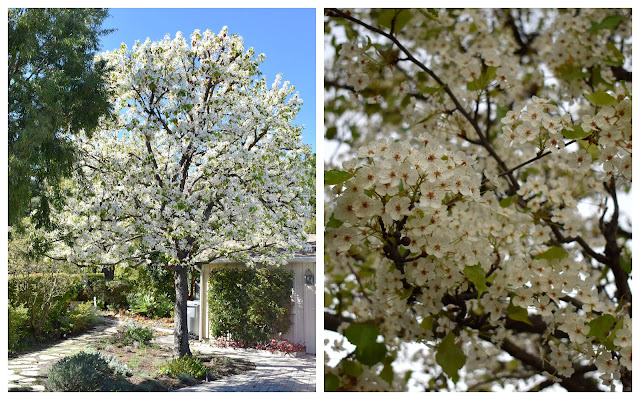
At the moment the leaves on my ornamental pear tree (Pyrus calleryana) are only just beginning to turn color, littering the driveway.  If it follows last year's schedule, it'll be covered in white flowers in early February like this.

Did you notice the red flowers of the shrub espaliered against the garage wall behind the ornamental pear tree in the last photo?  That's Calliandra haematocephala, commonly known as the red powder puff shrub.  It usually puts on a display starting in early January and running through March.

This was a big surprise last February.  It's a species tulip, T. humilis 'Alba Coerulea Oculata'.  It bloomed from bulbs I planted in November 2022 for the first time in February 2023.  Whether it'll bloom again in my climate remains to be seen, although my other species tulips, T. clusiana, have reliably returned years in a row.

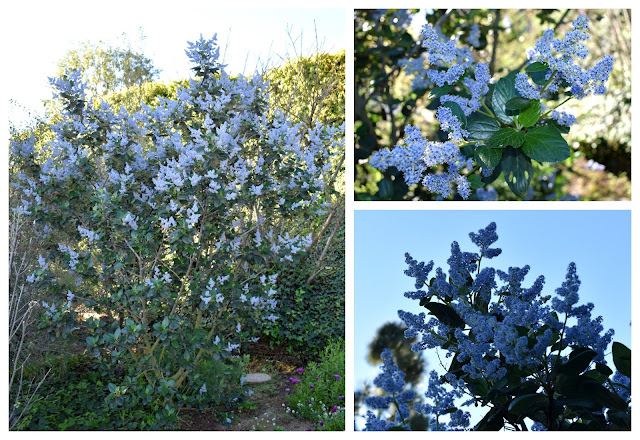
We got a LOT of rain last season (by our standards) and the Ceanothus arboreus 'Cliff Schmidt' on my back slope had a banner year.  So far, we've received less than half an inch of rain since the start of the 2024 "water year" on October 1st so I'm not sure I can count on a similar display come February 2024 but I can hope.


I'll cover the March-April timeframe on Wednesday and the May-June timeframe on Thursday.  In the meantime, drop in on Cathy at Words and Herbs to find the images she's pulled together to brighten wintry days.  You might also want to participate yourself.  Cathy welcomes all who wish to join in, asking only that they link to her A Week of Flowers post at Words and Herbs. 


All material © 2012-2023 by Kris Peterson for Late to the Garden Party


Tuesday, December 6, 2022

A Week in Flowers: The finish line

Cathy of Words and Herbs launched her annual 'Week of Flowers' last Wednesday to brighten the outlook of gardeners in the Northern Hemisphere facing all too many gloomy days during the colder winter months.   Coastal Southern California isn't nearly as cold or as gloomy as many areas but, after a long hot, dry summer and a steady decline in flowers, I find myself looking forward to spring, when every day reveals something new.  However, reflecting the name of my blog, I'm once again "late to the garden party" in pulling together photos to celebrate a Week in Flowers, delivering these on its very last day.

Spring arrives very early in my frost-free part of the world.  We don't have a winter in the sense that most people envision that season.  In fact, we often say we have just two seasons: a cool season and a warm-hot season.  Our cool season coincides with our rainy season, although we've been seriously short on rain for the last two years and we seem to be stuck in the same pattern this year.  But the combination of whatever rain we get and the lengthening days that follow the winter solstice begin the charge that leads to the flourish of flowers that arrive with spring.

I reviewed my floral photos from January through March 2022 to remind me of what I have to (hopefully) look forward to in 2023.


JANUARY
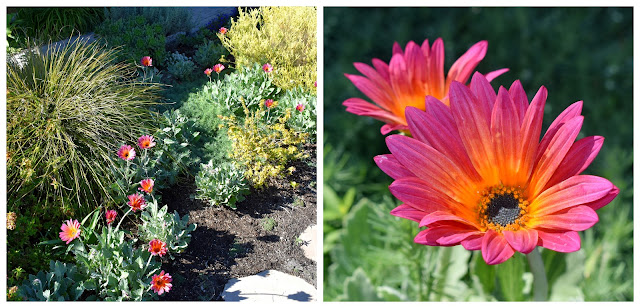
Last year, Arctotis 'Pink Sugar' started blooming in my back garden in January and continued for months.  The plants take a beating every summer but revive in response to rain.  Although the plants in my front garden look like they've thrown in the towel, I think those in the back are in better shape.

Camellia williamsii 'Taylor's Perfection' normally trails Camellia sasanqua in my garden by a couple of months.  An untimely heatwave has at times cost me the majority of the flowers.  I saw the first touch of pink in one bud yesterday so maybe the shrub is plotting an earlier appearance this year.

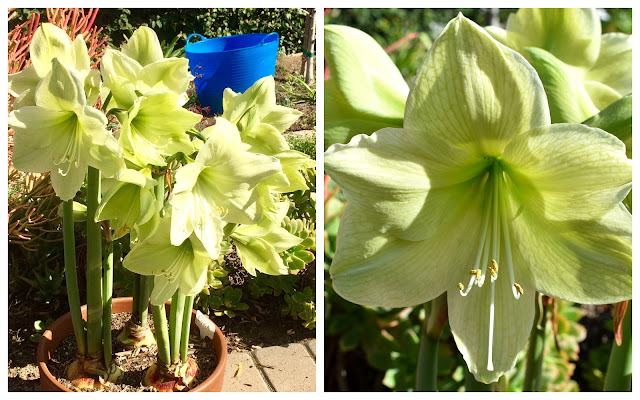
Last year Hippeastrum 'Luna' put on a magnificent performance in January.  I subsequently planted the bulbs in the ground in the hope that they'll naturalize.  If they do, they'll probably bloom several months later but that's okay - I planted other Hippeastrums bulbs in several pots this year for an earlier display.

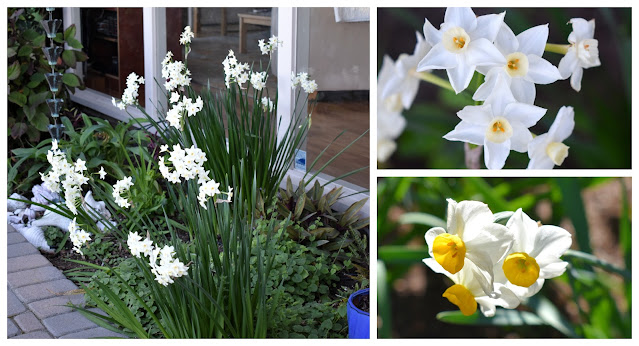
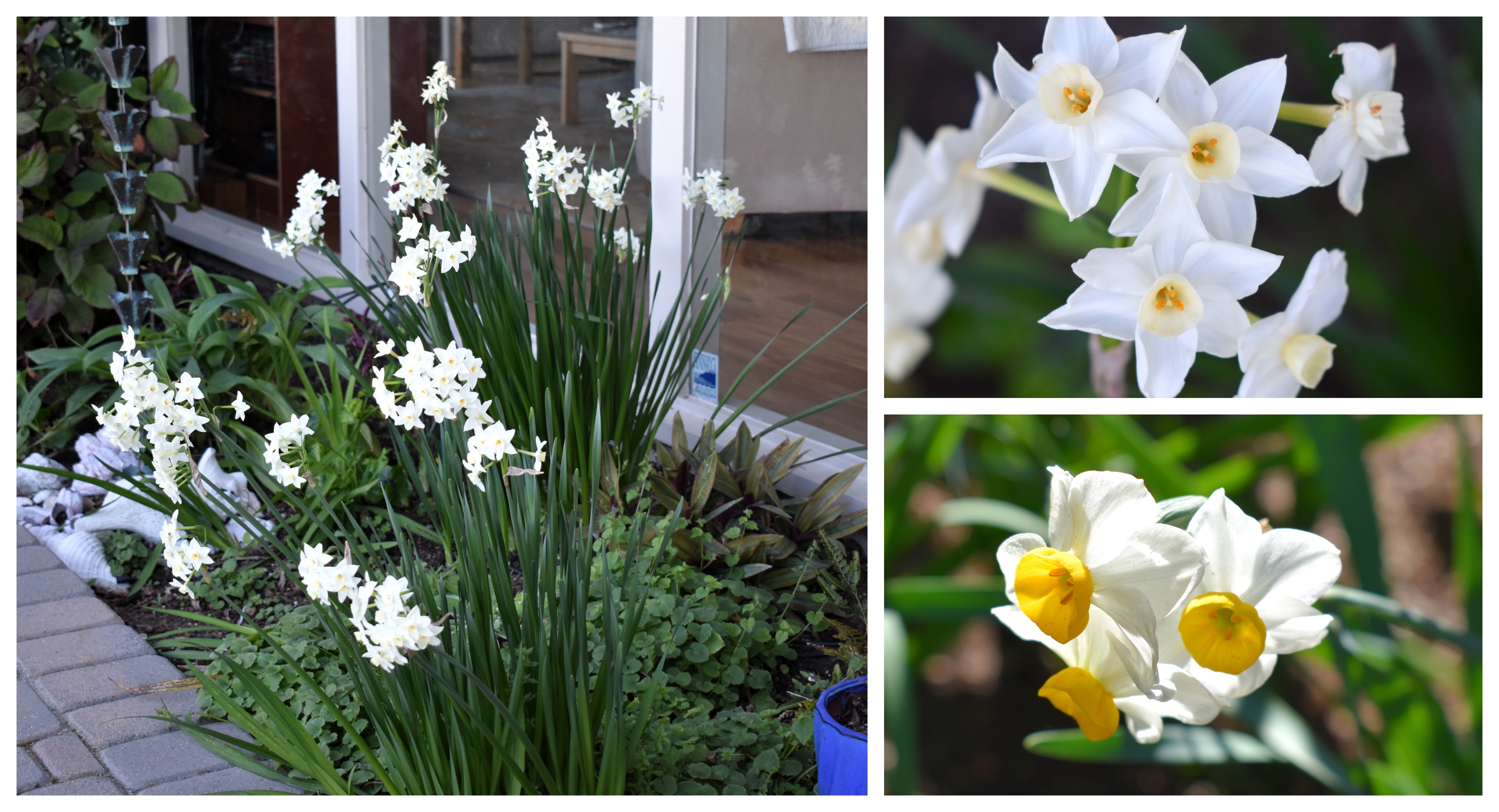
These noID paperwhite Narcissi, inherited with the garden, bloom early every year.  I've already noticed the stems poking up through the soil in this area.

FEBRUARY

Ceanothus arboreus 'Cliff Schmidt' was planted on my neglected and very dry back slope from a 1-gallon container in January 2018.  It's 7-8 feet tall now  and could eventually grow to 15-20 feet tall and wide.

Together with the paperwhite Narcissi, the first bulbs to bloom in my garden are usually the Freesias.  They began developing foliage a couple of months ago, although the voracious rabbits may be setting them back this year.

The colorful bracts of Leucadendron 'Wilson's Wonder' mimic flowers early each year; however, the gardeners mistook them for a hedge last month and I can't say what that's going to do to their normal "bloom" schedule.

The ornamental pear tree (Pyrus calleryana) is currently in the process of shedding all its leaves (and its annoying fruit).  It's also scheduled for its annual pruning in 2 weeks but I expect it'll still be blooming like this in late February.  It's very pretty even if its flowers do have a mildly unpleasant scent.

MARCH

The Anemone coronaria may start blooming as early as February in my cutting garden but these bulbs and others really take off in March

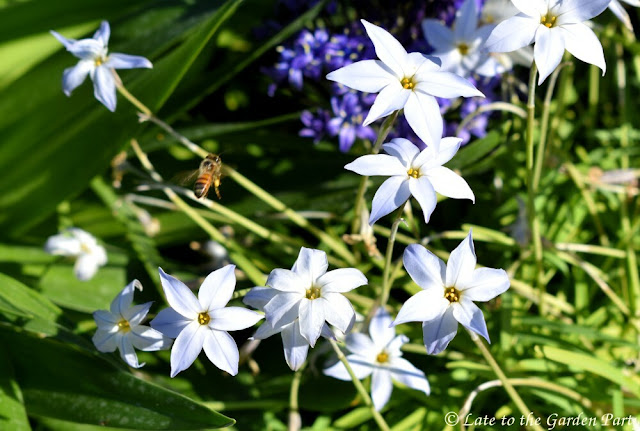
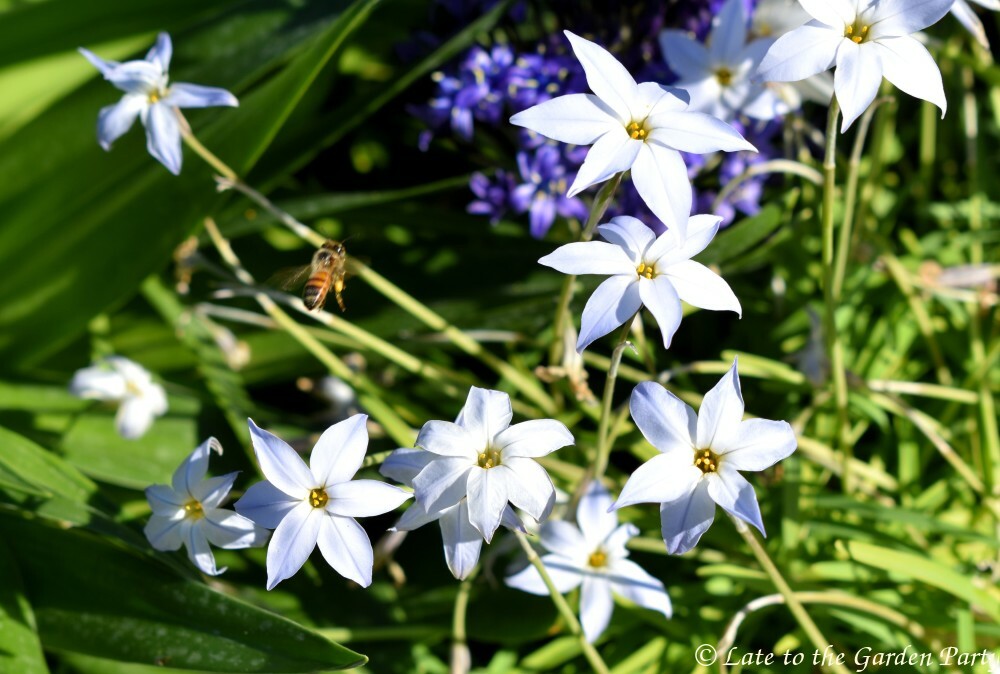
The foliage of the spring starflowers (Ipheion uniflorum) is already developing in some areas.  The tiny bulbs will probably begin flowering in February but should peak in March.

The tips of the Dutch Iris are already pushing up in some areas as well.  The majority of mine are 'Sapphire Beauty' (left) and 'Mystic Beauty' (right) but I plant more bulbs every fall.  This fall's addition was 'Pink Panther'.

The foliage of Scilla peruviana began to develop in September this year so maybe those flowers will appear earlier this coming spring as well

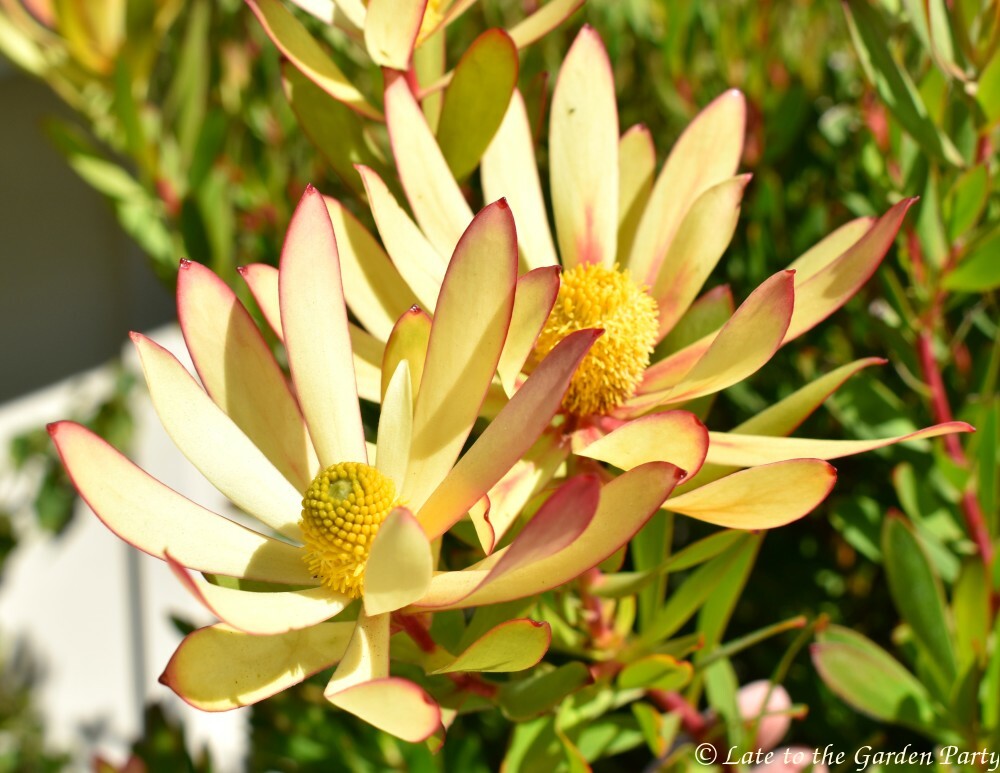
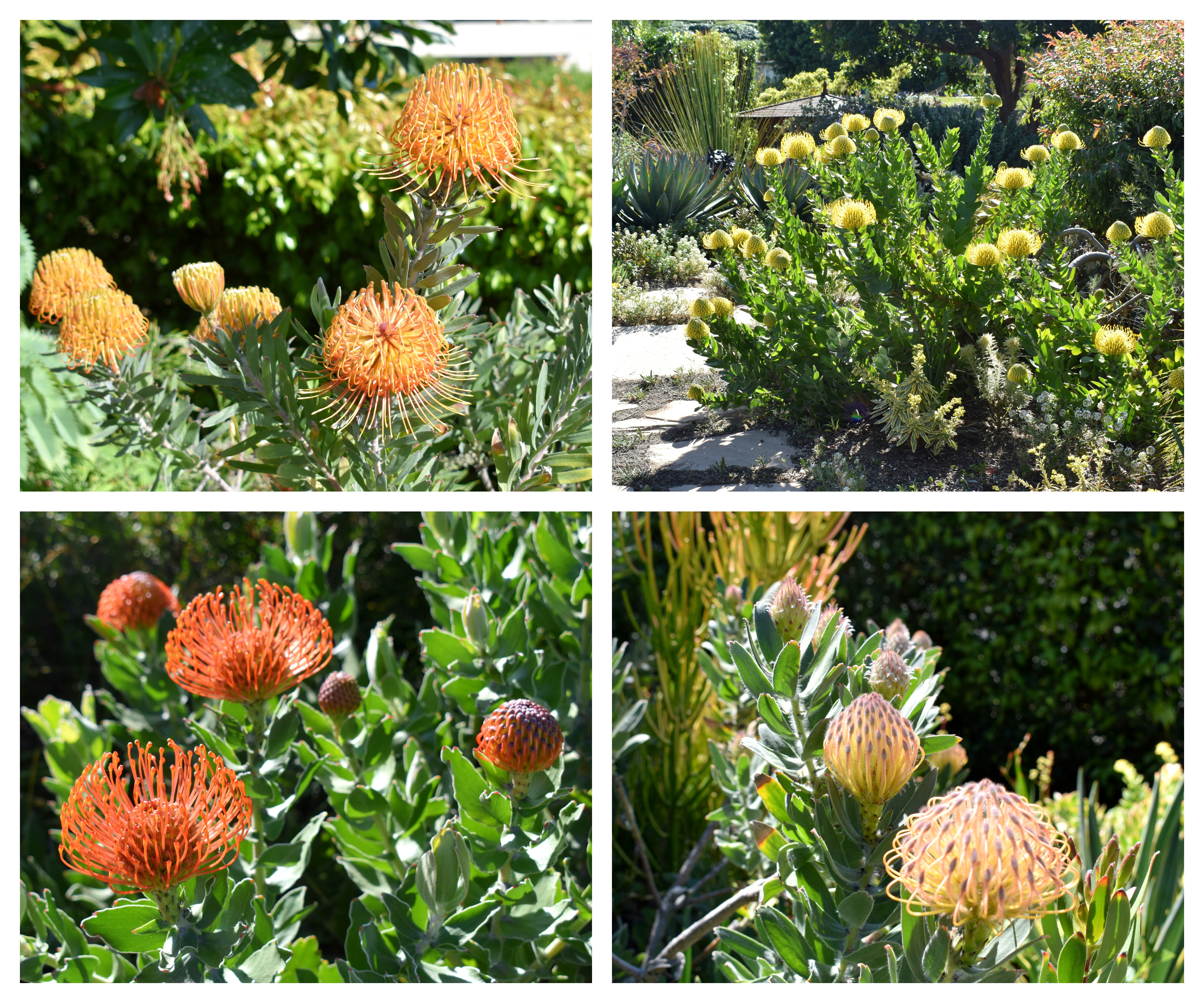
The pincushion shrubs, members of the Protea family, generally begin flowering in February with a peak performance as a group in March.  Clockwise from the upper left are Leucospermum 'Brandi', L. 'Goldie', L. 'Hybrid Spider', and L. 'Sunrise'.

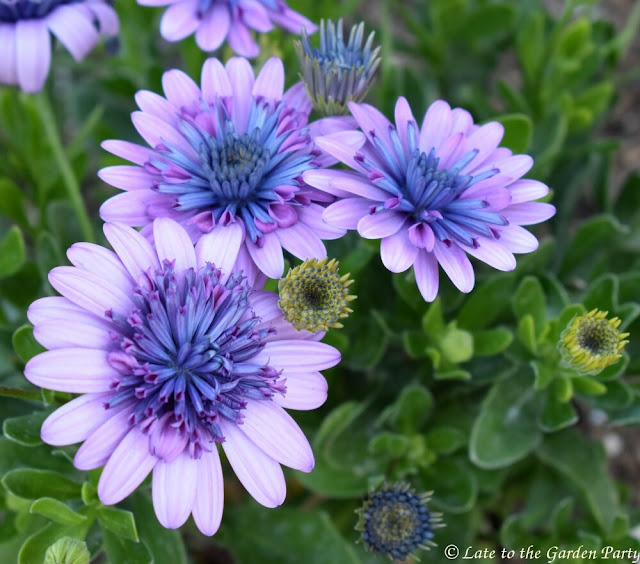
This is Osteospermum '4DPink'.  It was a new introduction to the genus last year.  Some didn't survive the summer and others appeared to develop a muddier color over time.  I'll be interested to see if any display colors this vivid next year.  


Thanks to Cathy for launching this campaign to lift everyone's spirits!  For other posts in this series, visit Cathy at Words and Herbs.


All material © 2012-2022 by Kris Peterson for Late to the Garden Party